Pets easily contract eye infections, as our furry friends play closely with other animals, dig around in the dirt, or run joyously through the bush.
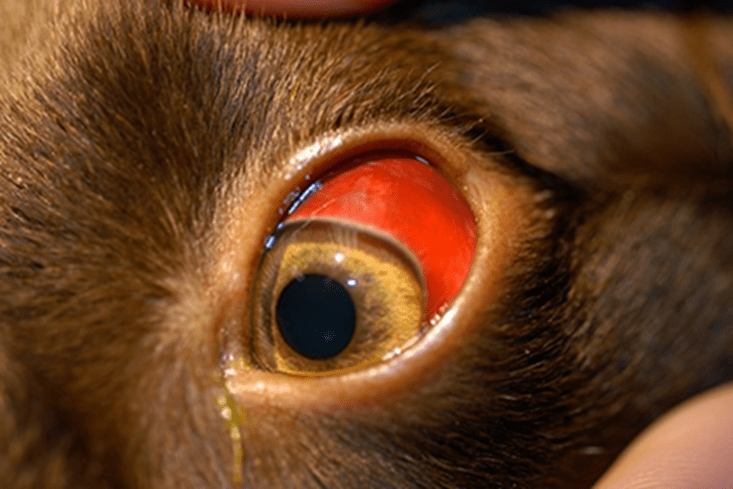
The first signs of an eye infection in your dog will normally include redness of the soft tissue (conjunctiva) around the eye and excess discharge, which can build up in the corner of the eye.
While a small amount of ‘sleep’ residue after awaking in the morning can be normal for most animals, any change to your pets’ eyes or colour/amount of this discharge should be taken seriously.
Read on to learn about the signs of eye infections in dogs, what causes them, and when to visit the vet.
The Anatomy of Your Pet’s Eyes
Knowing a bit of background about your pet’s eyes and what is normal can help you notice when something might be wrong.
The eye area is made up of:
- the eyeball itself (also known as the ‘globe’),
- surrounded by soft tissue (conjunctiva),
- and the eyelids.
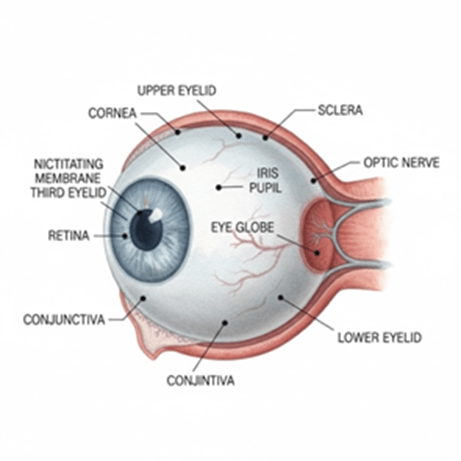
The eyeball has the black central pupil and surrounding coloured iris.
The white around the coloured portion of the eyeball, which is commonly seen when your pet looks up at us with its best ‘puppy-dog eyes’, is known as the sclera of the eye.
The entire surface of the eye is covered with a clear layer known as the cornea.
Healthy eyes should stay nice and clear, so that we can easily see the difference between these coloured portions of the eye. Any increased redness or blood vessels seen in the white sclera can help flag an issue with the eyeball.
Conjunctivitis in dogs
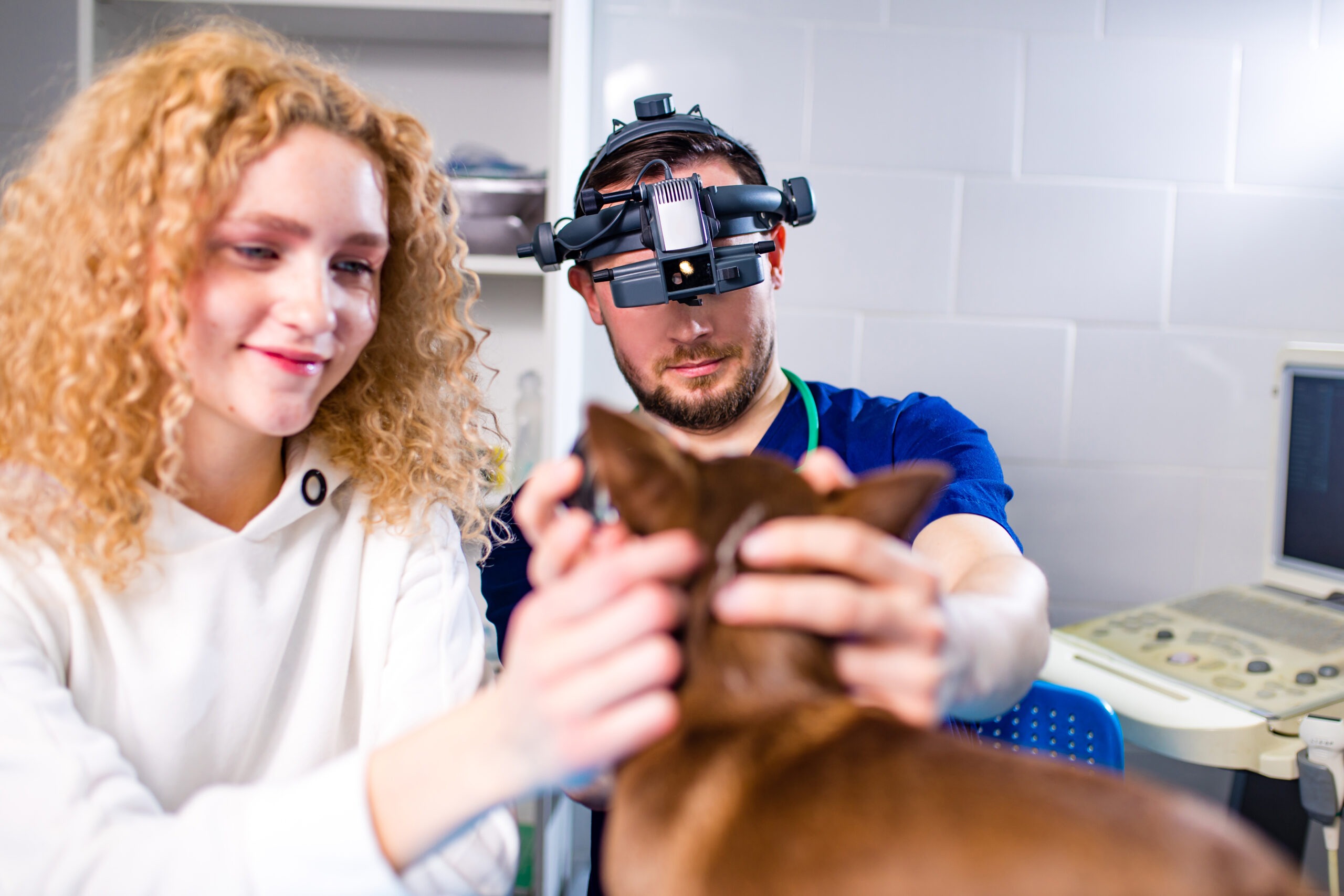
Conjunctivitis refers to inflammation of the soft tissue surrounding the eye (conjunctiva) and is the most common sign of an eye infection.
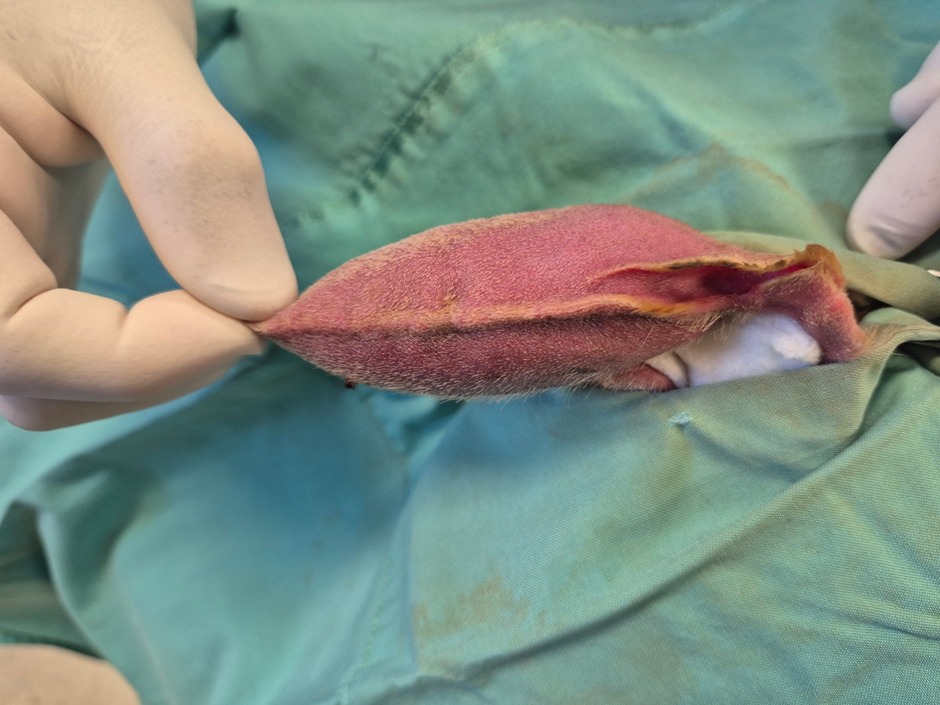
Sometimes, conjunctivitis can be seen just by looking at your dog’s eye from a distance. Unlike humans, both dogs and cats have a third eyelid, a flap of soft tissue and cartilage located in the inner corner of their eyes. This can become red and lift up to cover part of the eyeball as a sign of conjunctivitis or other conditions.
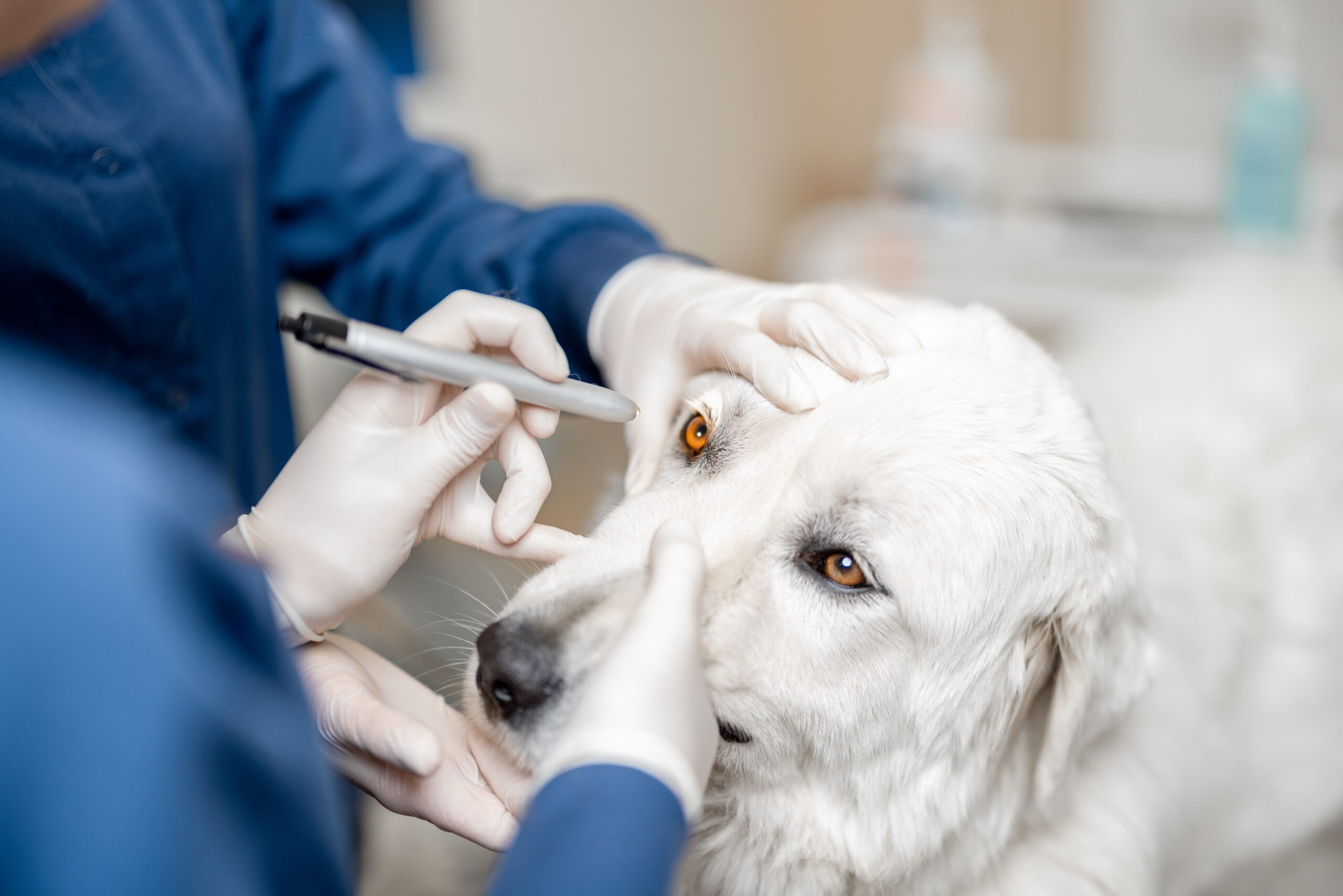
To further assess the conjunctiva, we can gently pull down the lower eyelid or pull up the upper lid to expose the other surrounding tissue that supports the eye.
Signs of eye infections in dogs
Eye infections can present in different ways. The most common symptoms include:


What causes eye infections in dogs?
- Allergies – just like us, pets can have allergies to pollens and grasses, as well as perfumes or scented cleaning products
- Bacterial infections – these are often contagious and passed on from other dogs or cats
- Underlying viral infections – such as calicivirus
- Foreign bodies – foreign material can wriggle its way into your pet’s eyes when playing. A common culprit can be grass seeds when playing outside
- Other underlying conditions – such as corneal ulcers, dry eye, pannus, glaucoma can also cause similar signs and should always be ruled out before commencing treatment
When to visit the vet – treatment and monitoring
Any changes to your pet’s eyes can be a reason for concern and justify a check-up with the vet.
Some simple eye infections can be treated with topical ointments to control an infection and reduce inflammation; it can be easy to overlook more serious conditions.
Here are some signs that your pet needs urgent veterinary attention.
- Reduced vision – this may be seen as getting startled easily, bumping into walls or furniture, tripping over objects, disorientation
- Squinting of the eye
- Changes to the colour or clarity of the cornea
- Other signs of pain such as pawing at the eye, vocalising, hiding away, becoming more reluctant to eat or drink
What can I do at home?
While awaiting a vet appointment, any discharge around your pets’ eyes should be wiped away with a dry tissue. Warm saline (or alternatively salt dissolved in water) can be used to clean away any dried discharge as needed. The aim of this is to reduce any crusting that can trap infection and cause irritation. Alternatively, a cold chamomile or black tea bag can be held over the eye to help calm inflammation.
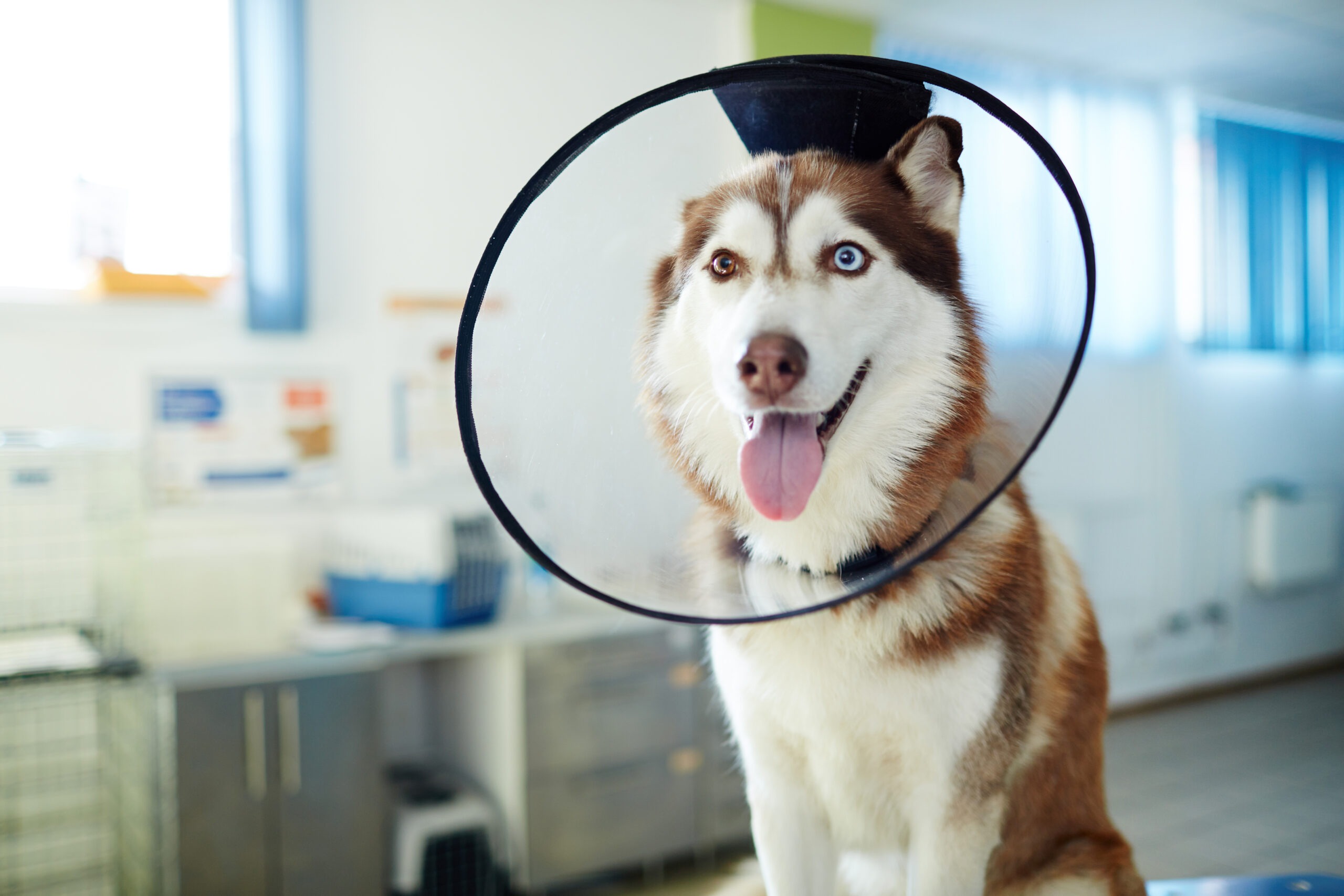
If your dog is rubbing at their eyes, an Elizabethan collar (also known as a ‘cone of shame’) can be used to prevent them from scratching the surface or the eye and causing a secondary ulcer.
When it’s not quite so simple
Eye infections can occur secondary to ulceration or can advance to painful inflammation of the eyelids (known as blepharoconjunctivitis).
Because eyes can change quickly, revisits are often required to ensure the condition is improving as expected. These may even be recommended as early as the following day or two if there are particular concerns.
We’d expect a simple eye infection to resolve within 5-7 days of starting appropriate medication. If the condition is not improving as expected, additional medications or treatment plans may be recommended.
Summary
Our furry friends love to play, dig, and explore – but all that fun can sometimes lead to pesky eye infections.
If you notice red eyes, weird discharge, squinting, or your pet pawing at their face, it can mean a vet appointment is needed.
Eye infections in dogs can be caused by everything from allergies and bacteria to sneaky grass seeds.
While some mild cases can be soothed at home with gentle cleaning, it’s always best to check in with your vet.
Eyes can change fast, and prompt and appropriate treatment means happier, healthier pets in no time!
Would you like to talk to an experienced, understanding, and qualified Australian vet about your dog’s eyes? Call us tel: (03) 5902 7087, or book a consultation today.